State of Defense 2026 - Agenda
Register    ➤

Agenda

2:00 PM EDT
30 MINS
2:00 PM EDT 30 MINS
Keynote

Leadership Keynote - Navy

2:30 PM EDT
30 MINS
2:30 PM EDT 30 MINS
Panel

Building the Golden Fleet

Eric Chewning
Eric Chewning
Executive Vice President, Maritime Systems & Corporate Strategy
HII/Ingalls Shipbuilding
Bryan Clark
Bryan Clark
Senior Fellow and Director, Center for Defense Concepts and Technology
Hudson Institute
Seamus Daniels
Seamus Daniels
Fellow, Defense Budget Analysis
Center for Strategic and International Studies

President Trump has focused on shipbuilding as one of his top priorities in his second administration, and Navy Secretary John Phelan in December announced that Trump had OK’d a future “Golden Fleet.” Speaking at the Reagan Defense Forum, Phelan said, “We will continue to build ships that are the cornerstones of the fleet—carriers, destroyers, amphibs, submarines. But we need new ships and we need modern ships.” Join us for a conversation with experts about the current challenges in the shipbuilding industry, how the Navy is working to overcome those challenges, and what the Golden Fleet may look like.

Eric Chewning
Eric Chewning
Executive Vice President, Maritime Systems & Corporate Strategy
HII/Ingalls Shipbuilding
Bryan Clark
Bryan Clark
Senior Fellow and Director, Center for Defense Concepts and Technology
Hudson Institute
Seamus Daniels
Seamus Daniels
Fellow, Defense Budget Analysis
Center for Strategic and International Studies

President Trump has focused on shipbuilding as one of his top priorities in his second administration, and Navy Secretary John Phelan in December announced that Trump had OK’d a future “Golden Fleet.” Speaking at the Reagan Defense Forum, Phelan said, “We will continue to build ships that are the cornerstones of the fleet—carriers, destroyers, amphibs, submarines. But we need new ships and we need modern ships.” Join us for a conversation with experts about the current challenges in the shipbuilding industry, how the Navy is working to overcome those challenges, and what the Golden Fleet may look like.

President Trump has focused on shipbuilding as one of his top priorities in his second administration, and Navy Secretary John Phelan in December announced that Trump had OK’d a future “Golden Fleet.” Speaking at the Reagan Defense Forum, Phelan said, “We will continue to build ships that are the cornerstones of the fleet—carriers, destroyers, amphibs, submarines. But we need new ships and we need modern ships.” Join us for a conversation with experts about the current challenges in the shipbuilding industry, how the Navy is working to overcome those challenges, and what the Golden Fleet may look like.

Eric Chewning
Eric Chewning
Executive Vice President, Maritime Systems & Corporate Strategy
HII/Ingalls Shipbuilding
Bryan Clark
Bryan Clark
Senior Fellow and Director, Center for Defense Concepts and Technology
Hudson Institute
Seamus Daniels
Seamus Daniels
Fellow, Defense Budget Analysis
Center for Strategic and International Studies

President Trump has focused on shipbuilding as one of his top priorities in his second administration, and Navy Secretary John Phelan in December announced that Trump had OK’d a future “Golden Fleet.” Speaking at the Reagan Defense Forum, Phelan said, “We will continue to build ships that are the cornerstones of the fleet—carriers, destroyers, amphibs, submarines. But we need new ships and we need modern ships.” Join us for a conversation with experts about the current challenges in the shipbuilding industry, how the Navy is working to overcome those challenges, and what the Golden Fleet may look like.

3:00 PM EDT
30 MINS
3:00 PM EDT 30 MINS
Panel

Operation Southern Spear

The U.S. in late August began a naval buildup in the Caribbean Sea, and in September began launching strikes against alleged narcoterrorists in the region as part of Operation Southern Spear. Join us for a conversation about the Caribbean operation designed to “crush” drug trafficking in the Western Hemisphere, and what America’s naval forces are learning from the ongoing efforts.

The U.S. in late August began a naval buildup in the Caribbean Sea, and in September began launching strikes against alleged narcoterrorists in the region as part of Operation Southern Spear. Join us for a conversation about the Caribbean operation designed to “crush” drug trafficking in the Western Hemisphere, and what America’s naval forces are learning from the ongoing efforts.

The U.S. in late August began a naval buildup in the Caribbean Sea, and in September began launching strikes against alleged narcoterrorists in the region as part of Operation Southern Spear. Join us for a conversation about the Caribbean operation designed to “crush” drug trafficking in the Western Hemisphere, and what America’s naval forces are learning from the ongoing efforts.

The U.S. in late August began a naval buildup in the Caribbean Sea, and in September began launching strikes against alleged narcoterrorists in the region as part of Operation Southern Spear. Join us for a conversation about the Caribbean operation designed to “crush” drug trafficking in the Western Hemisphere, and what America’s naval forces are learning from the ongoing efforts.

3:30 PM EDT
10 MINS
3:30 PM EDT 10 MINS

Break

3:40 PM EDT
30 MINS
3:40 PM EDT 30 MINS
Keynote

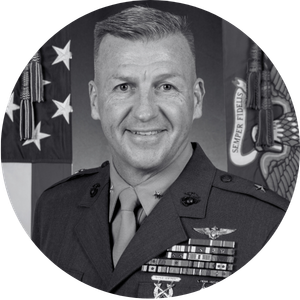
Leadership Keynote - Marines

4:10 PM EDT
30 MINS
4:10 PM EDT 30 MINS
Panel

Beyond sea to shore

Col. Gabe Diana
Col. Gabe Diana
Commanding Officer
3d Marine Littoral Regiment
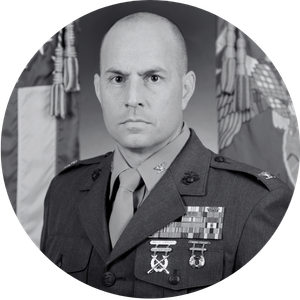
Col. Richard Neikirk
Commanding Officer
12th Marine Littoral Regiment

Jenifer Hlad
Jenifer Hlad
Managing Editor
Defense One

The Marines’ mission has moved beyond the traditional capability of projecting power from the sea to the land, to now include operating from and to all domains. But despite rapid advances, challenges remain: Low amphibious ship readiness is a consistent problem, and the long-anticipated landing ship medium program is only now getting underway. Join Defense One for a discussion of the new amphibious capabilities Marines in the Pacific are developing, and the hurdles they’re overcoming to evolve.

Col. Gabe Diana
Col. Gabe Diana
Commanding Officer
3d Marine Littoral Regiment
Col. Richard Neikirk
Commanding Officer
12th Marine Littoral Regiment
Jenifer Hlad
Jenifer Hlad
Managing Editor
Defense One

The Marines’ mission has moved beyond the traditional capability of projecting power from the sea to the land, to now include operating from and to all domains. But despite rapid advances, challenges remain: Low amphibious ship readiness is a consistent problem, and the long-anticipated landing ship medium program is only now getting underway. Join Defense One for a discussion of the new amphibious capabilities Marines in the Pacific are developing, and the hurdles they’re overcoming to evolve.

The Marines’ mission has moved beyond the traditional capability of projecting power from the sea to the land, to now include operating from and to all domains. But despite rapid advances, challenges remain: Low amphibious ship readiness is a consistent problem, and the long-anticipated landing ship medium program is only now getting underway. Join Defense One for a discussion of the new amphibious capabilities Marines in the Pacific are developing, and the hurdles they’re overcoming to evolve.

Col. Gabe Diana
Col. Gabe Diana
Commanding Officer
3d Marine Littoral Regiment
Col. Richard Neikirk
Commanding Officer
12th Marine Littoral Regiment
Jenifer Hlad
Jenifer Hlad
Managing Editor
Defense One

The Marines’ mission has moved beyond the traditional capability of projecting power from the sea to the land, to now include operating from and to all domains. But despite rapid advances, challenges remain: Low amphibious ship readiness is a consistent problem, and the long-anticipated landing ship medium program is only now getting underway. Join Defense One for a discussion of the new amphibious capabilities Marines in the Pacific are developing, and the hurdles they’re overcoming to evolve.

4:40 PM EDT
30 MINS
4:40 PM EDT 30 MINS
Panel

The future of Marine technology

Brig. Gen. Simon Doran
Commanding General
Marine Corps Warfighting Laboratory

Lauren Williams
Lauren Williams
Business Editor
Defense One

New technologies are steadily changing how the Marine Corps plans, trains, and operates on modern battlefields. Advances in autonomy, unmanned systems, and long-range precision fires are expanding the tools available to commanders and creating new options for operating in complex, contested environments. In this session, Marine Corps leaders and defense technology experts will discuss how autonomous and semi-autonomous systems are being integrated into today’s force. The conversation will explore the growing role of drones for intelligence, surveillance, reconnaissance, and logistics, the emergence of robotic wingmen and human-machine teaming, and how long-range fires are evolving alongside modern sensor and targeting networks to enable more precise and responsive operations.

Brig. Gen. Simon Doran
Commanding General
Marine Corps Warfighting Laboratory
Lauren Williams
Lauren Williams
Business Editor
Defense One

New technologies are steadily changing how the Marine Corps plans, trains, and operates on modern battlefields. Advances in autonomy, unmanned systems, and long-range precision fires are expanding the tools available to commanders and creating new options for operating in complex, contested environments. In this session, Marine Corps leaders and defense technology experts will discuss how autonomous and semi-autonomous systems are being integrated into today’s force. The conversation will explore the growing role of drones for intelligence, surveillance, reconnaissance, and logistics, the emergence of robotic wingmen and human-machine teaming, and how long-range fires are evolving alongside modern sensor and targeting networks to enable more precise and responsive operations.

New technologies are steadily changing how the Marine Corps plans, trains, and operates on modern battlefields. Advances in autonomy, unmanned systems, and long-range precision fires are expanding the tools available to commanders and creating new options for operating in complex, contested environments. In this session, Marine Corps leaders and defense technology experts will discuss how autonomous and semi-autonomous systems are being integrated into today’s force. The conversation will explore the growing role of drones for intelligence, surveillance, reconnaissance, and logistics, the emergence of robotic wingmen and human-machine teaming, and how long-range fires are evolving alongside modern sensor and targeting networks to enable more precise and responsive operations.

Brig. Gen. Simon Doran
Commanding General
Marine Corps Warfighting Laboratory
Lauren Williams
Lauren Williams
Business Editor
Defense One

New technologies are steadily changing how the Marine Corps plans, trains, and operates on modern battlefields. Advances in autonomy, unmanned systems, and long-range precision fires are expanding the tools available to commanders and creating new options for operating in complex, contested environments. In this session, Marine Corps leaders and defense technology experts will discuss how autonomous and semi-autonomous systems are being integrated into today’s force. The conversation will explore the growing role of drones for intelligence, surveillance, reconnaissance, and logistics, the emergence of robotic wingmen and human-machine teaming, and how long-range fires are evolving alongside modern sensor and targeting networks to enable more precise and responsive operations.

2:00 PM EDT
30 MINS
2:00 PM EDT 30 MINS
Keynote

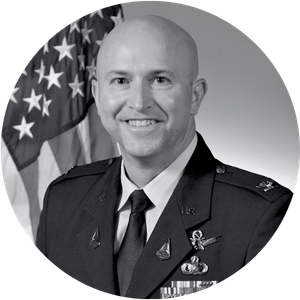
Leadership Keynote - Air Force

2:30 PM EDT
30 MINS
2:30 PM EDT 30 MINS
Panel

CCAs

Dr. Jason Levin Ph.D.
SVP, Air Dominance & Strike
Anduril Industries

The Air Force has rapidly progressed on its first collaborative combat aircraft, going from concept to first flight in just 16 months. Now, the service is looking at the second round of its drone wingman completion and has incorporated the robot drone concept into its future fighter jet plans. What innovations does the Air Force want to see from industry on future CCAs while still balancing cost expectations? What will the integration of drone wingmen mean for future combat operations?

Dr. Jason Levin Ph.D.
SVP, Air Dominance & Strike
Anduril Industries

The Air Force has rapidly progressed on its first collaborative combat aircraft, going from concept to first flight in just 16 months. Now, the service is looking at the second round of its drone wingman completion and has incorporated the robot drone concept into its future fighter jet plans. What innovations does the Air Force want to see from industry on future CCAs while still balancing cost expectations? What will the integration of drone wingmen mean for future combat operations?

The Air Force has rapidly progressed on its first collaborative combat aircraft, going from concept to first flight in just 16 months. Now, the service is looking at the second round of its drone wingman completion and has incorporated the robot drone concept into its future fighter jet plans. What innovations does the Air Force want to see from industry on future CCAs while still balancing cost expectations? What will the integration of drone wingmen mean for future combat operations?

Dr. Jason Levin Ph.D.
SVP, Air Dominance & Strike
Anduril Industries

The Air Force has rapidly progressed on its first collaborative combat aircraft, going from concept to first flight in just 16 months. Now, the service is looking at the second round of its drone wingman completion and has incorporated the robot drone concept into its future fighter jet plans. What innovations does the Air Force want to see from industry on future CCAs while still balancing cost expectations? What will the integration of drone wingmen mean for future combat operations?

3:00 PM EDT
30 MINS
3:00 PM EDT 30 MINS
Panel

Acquisition reform

Steven Grundman
Steven Grundman
Senior Fellow
Atlantic Council
Todd Harrison
Todd Harrison
Senior Fellow
AEI
Lauren Williams
Lauren Williams
Business Editor
Defense One

The Air Force has worked quickly to comply with Defense Secretary Pete Hegseth’s acquisition reform mandates. In addition to announcing new program acquisition executives, the service has named an Air Force general as a portfolio manager for critical major weapons systems, reporting directly to the Office of the Secretary of Defense on major programs such as the Sentinel and Minuteman III intercontinental ballistic missiles, the B-21 bomber, the F-47 fighter jet, and the VC-25B presidential aircraft. Does Air Force leadership believe these changes will lead to more affordable and effective defense programs? This panel will examine that question and more.

Steven Grundman
Steven Grundman
Senior Fellow
Atlantic Council
Todd Harrison
Todd Harrison
Senior Fellow
AEI
Lauren Williams
Lauren Williams
Business Editor
Defense One

The Air Force has worked quickly to comply with Defense Secretary Pete Hegseth’s acquisition reform mandates. In addition to announcing new program acquisition executives, the service has named an Air Force general as a portfolio manager for critical major weapons systems, reporting directly to the Office of the Secretary of Defense on major programs such as the Sentinel and Minuteman III intercontinental ballistic missiles, the B-21 bomber, the F-47 fighter jet, and the VC-25B presidential aircraft. Does Air Force leadership believe these changes will lead to more affordable and effective defense programs? This panel will examine that question and more.

The Air Force has worked quickly to comply with Defense Secretary Pete Hegseth’s acquisition reform mandates. In addition to announcing new program acquisition executives, the service has named an Air Force general as a portfolio manager for critical major weapons systems, reporting directly to the Office of the Secretary of Defense on major programs such as the Sentinel and Minuteman III intercontinental ballistic missiles, the B-21 bomber, the F-47 fighter jet, and the VC-25B presidential aircraft. Does Air Force leadership believe these changes will lead to more affordable and effective defense programs? This panel will examine that question and more.

Steven Grundman
Steven Grundman
Senior Fellow
Atlantic Council
Todd Harrison
Todd Harrison
Senior Fellow
AEI
Lauren Williams
Lauren Williams
Business Editor
Defense One

The Air Force has worked quickly to comply with Defense Secretary Pete Hegseth’s acquisition reform mandates. In addition to announcing new program acquisition executives, the service has named an Air Force general as a portfolio manager for critical major weapons systems, reporting directly to the Office of the Secretary of Defense on major programs such as the Sentinel and Minuteman III intercontinental ballistic missiles, the B-21 bomber, the F-47 fighter jet, and the VC-25B presidential aircraft. Does Air Force leadership believe these changes will lead to more affordable and effective defense programs? This panel will examine that question and more.

3:30 PM EDT
10 MINS
3:30 PM EDT 10 MINS

Break

3:40 PM EDT
30 MINS
3:40 PM EDT 30 MINS
Keynote

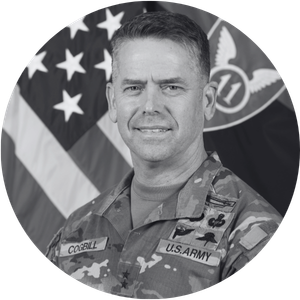
Leadership Keynote - Space Force

​​Lt. Gen. Gregory Gagnon
Commander​
U.S. Space Force Combat Forces Command
4:10 PM EDT
30 MINS
4:10 PM EDT 30 MINS
Panel

Contested space

Victoria Samson
Victoria Samson
Chief Director, Space Security and Stability
Secure World Foundation

As space becomes an increasingly critical domain for military operations, the United States and its allies are facing a more congested, competitive, and contested orbital environment. From counterspace threats and debris risks to the growing reliance on space-enabled intelligence, communications, navigation, and missile warning, space is now inseparable from modern deterrence and warfighting. In this session, senior military leaders and space policy experts will examine how the U.S. is preparing for operations in a contested space environment. The conversation will explore evolving threats from peer competitors, the role of resilience and deterrence in orbit, and how military and commercial partnerships are reshaping space architecture. Panelists will also discuss what it means to operate, defend, and sustain space capabilities in an era where space superiority can no longer be assumed.

Victoria Samson
Victoria Samson
Chief Director, Space Security and Stability
Secure World Foundation

As space becomes an increasingly critical domain for military operations, the United States and its allies are facing a more congested, competitive, and contested orbital environment. From counterspace threats and debris risks to the growing reliance on space-enabled intelligence, communications, navigation, and missile warning, space is now inseparable from modern deterrence and warfighting. In this session, senior military leaders and space policy experts will examine how the U.S. is preparing for operations in a contested space environment. The conversation will explore evolving threats from peer competitors, the role of resilience and deterrence in orbit, and how military and commercial partnerships are reshaping space architecture. Panelists will also discuss what it means to operate, defend, and sustain space capabilities in an era where space superiority can no longer be assumed.

As space becomes an increasingly critical domain for military operations, the United States and its allies are facing a more congested, competitive, and contested orbital environment. From counterspace threats and debris risks to the growing reliance on space-enabled intelligence, communications, navigation, and missile warning, space is now inseparable from modern deterrence and warfighting. In this session, senior military leaders and space policy experts will examine how the U.S. is preparing for operations in a contested space environment. The conversation will explore evolving threats from peer competitors, the role of resilience and deterrence in orbit, and how military and commercial partnerships are reshaping space architecture. Panelists will also discuss what it means to operate, defend, and sustain space capabilities in an era where space superiority can no longer be assumed.

Victoria Samson
Victoria Samson
Chief Director, Space Security and Stability
Secure World Foundation

As space becomes an increasingly critical domain for military operations, the United States and its allies are facing a more congested, competitive, and contested orbital environment. From counterspace threats and debris risks to the growing reliance on space-enabled intelligence, communications, navigation, and missile warning, space is now inseparable from modern deterrence and warfighting. In this session, senior military leaders and space policy experts will examine how the U.S. is preparing for operations in a contested space environment. The conversation will explore evolving threats from peer competitors, the role of resilience and deterrence in orbit, and how military and commercial partnerships are reshaping space architecture. Panelists will also discuss what it means to operate, defend, and sustain space capabilities in an era where space superiority can no longer be assumed.

4:40 PM EDT
30 MINS
4:40 PM EDT 30 MINS
Panel

To Be Announced

2:00 PM EDT
30 MINS
2:00 PM EDT 30 MINS
Panel

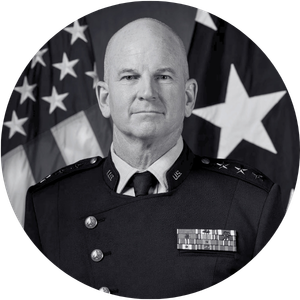
Leadership Keynote - Army

2:30 PM EDT
30 MINS
2:30 PM EDT 30 MINS
Panel

Transforming Army Tech

The Army’s modernization initiative, Transformation in Contact, is dramatically changing how the service handles acquisition—allowing contractors to bring their tech to soldiers in the field, take feedback, and make changes on the spot. In just the first iteration of the initiative, soldiers tested 360 unmanned aerial systems, 800 mobility systems, 50 counter-UAS systems, 20 persistent lower-orbit communications systems, and 10 electronic warfare systems. And now the Army has expanded the program to more units throughout the service. In this panel, Defense One will speak to leaders about what they’ve learned so far, and what the future holds for Army tech.

The Army’s modernization initiative, Transformation in Contact, is dramatically changing how the service handles acquisition—allowing contractors to bring their tech to soldiers in the field, take feedback, and make changes on the spot. In just the first iteration of the initiative, soldiers tested 360 unmanned aerial systems, 800 mobility systems, 50 counter-UAS systems, 20 persistent lower-orbit communications systems, and 10 electronic warfare systems. And now the Army has expanded the program to more units throughout the service. In this panel, Defense One will speak to leaders about what they’ve learned so far, and what the future holds for Army tech.

The Army’s modernization initiative, Transformation in Contact, is dramatically changing how the service handles acquisition—allowing contractors to bring their tech to soldiers in the field, take feedback, and make changes on the spot. In just the first iteration of the initiative, soldiers tested 360 unmanned aerial systems, 800 mobility systems, 50 counter-UAS systems, 20 persistent lower-orbit communications systems, and 10 electronic warfare systems. And now the Army has expanded the program to more units throughout the service. In this panel, Defense One will speak to leaders about what they’ve learned so far, and what the future holds for Army tech.

The Army’s modernization initiative, Transformation in Contact, is dramatically changing how the service handles acquisition—allowing contractors to bring their tech to soldiers in the field, take feedback, and make changes on the spot. In just the first iteration of the initiative, soldiers tested 360 unmanned aerial systems, 800 mobility systems, 50 counter-UAS systems, 20 persistent lower-orbit communications systems, and 10 electronic warfare systems. And now the Army has expanded the program to more units throughout the service. In this panel, Defense One will speak to leaders about what they’ve learned so far, and what the future holds for Army tech.

3:00 PM EDT
30 MINS
3:00 PM EDT 30 MINS
Panel

To Be Announced